
Comic culture can be daunting. The world is changing, I know, but I remember the days when I, a young (feminine) reader of comics, felt really uncomfortable and unwelcome in a comic book shop. The closest thing I got to representation was Sailor Moon, which I was clearly too much of a proto-Cool Girl to read (I regret this now. I wish Sailor Moon boxsets weren’t so expensive, because apparently the manga and the show dealt with some pretty feminist stuff that I missed out on because there were sparkles and love interests. Learn from me. Don’t give in to the siren song of androcentrism). The rest of the shop was full of examples of physically impossible, lasciviously explicit fantasy women that I didn’t resemble, didn’t wish to resemble, but still somehow felt judged by the (male) customers of the shop for not resembling.
Nowadays, comic book shops are adrift with a plethora of graphic novels, cute Funko Pops and are populated with women, girls, and LGBTQIA+ folx. It is a far more inclusive space, but that doesn’t necessarily mean it’s perfect or any less daunting. Especially online. Some nooks of the internet are warm, cosy and welcome, but heaven help you if you ask the wrong question on the wrong message board. Is that a Nirvana t-shirt you’re wearing in your profile picture? Can you even name three of their songs from the 1988 demo version of Bleach?!
[No, I can’t. I had to do extensive Googling just to make that joke.]
But I digress. This particular reading list is for the beginner, the person who isn’t sure where to start. The comics aren’t listed in any particular order and they aren’t bound by genre. I’ve tried to include classic/familiar comic books (look, Batman!) as well as some more unusual ones that changed the landscape of comic creation (Eisner is a name you will want to know). Some recreate cultural history, some personal history, some are re-imaginings of historical events. Some take place in fantastic landscapes that nevertheless comment on, dare I say, the human experience. They are all excellent reads, and I don’t think a beginner could go wrong with this list.

The Contract with God Trilogy, by Will Eisner
The blurb: As the dramas unfold in A Contract With God, the first book in this new trilogy, it is at 55 Dropsie Avenue where Frimme Hersh, the pious Jew, first loses his beloved daughter, then breaks his contract with his maker, and ends up as a slumlord; it is on Dropsie Avenue where a street singer, befriended by an aging diva, is so beholden to the bottle that he fails to grasp his chance for stardom; and it is there that a scheming little girl named Rosie poisons a depraved super’s dog before doing in the super as well.
In the second book, A Life Force, Eisner re-creates himself in his protagonist, Jacob Shtarkah, whose existential search reflected Eisner’s own lifelong struggle. Chronicling not only the Crash of 1929 and the Great Depression but also the rise of Nazism and the spread of left-wing politics, Eisner combined the miniaturist sensibility of Henry Roth with the grand social themes of novelists such as Dos Passos and Steinbeck.
Finally, in Dropsie Avenue: The Neighborhood, Eisner graphically traces the social trajectory of this mythic avenue over four centuries, creating a sweeping panorama of the city and its waves of new residents―the Dutch, English, Irish, Jews, African Americans, and Puerto Ricans―whose faces changed yet whose lives presented an unending “story of life, death, and resurrection.”
The Contract With God Trilogy is a mesmerizing, fictional chronicle of a universal American experience and Eisner’’ most poignant and enduring literary legacy.
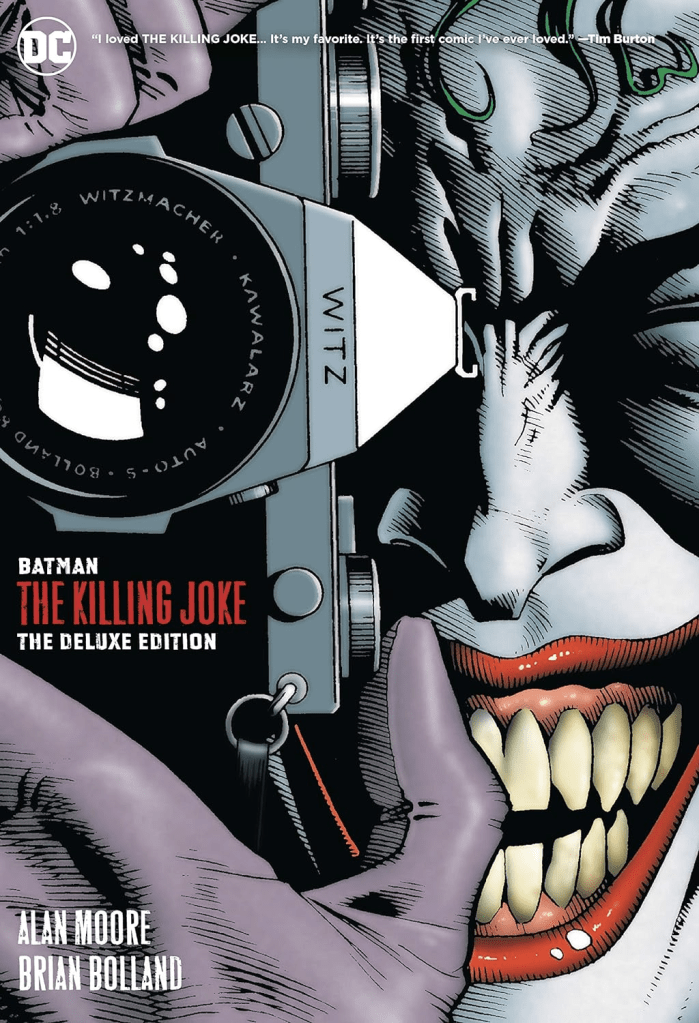
Batman: The Killing Joke, by Alan Moore
The blurb: ONE BAD DAY. According to the grinning engine of madness and mayhem known as the Joker, that’s all that separates the sane from the psychotic. Freed once again from the confines of Arkham Asylum, he’s out to prove his deranged point. And he’s going to use Gotham City’s top cop, Commissioner Jim Gordon, and his brilliant and beautiful daughter Barbara to do it.
Now Batman must race to stop his archnemesis before his reign of terror claims two of the Dark Knight’s closest friends. Can he finally put an end to the cycle of bloodlust and lunacy that links these two iconic foes before it leads to its fatal conclusion? And as the horrifying origin of the Clown Prince of Crime is finally revealed, will the thin line that separates Batman’s nobility and the Joker’s insanity snap once and for all?
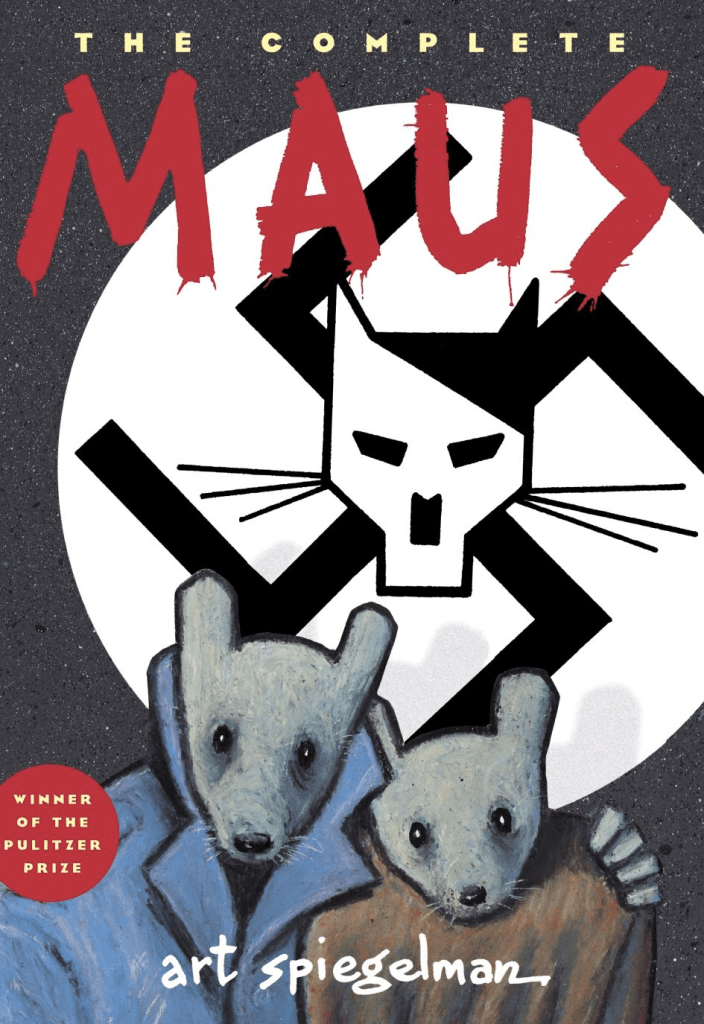
Maus, by Art Spiegelman
The blurb: Maus tells the story of Vladek Spiegelman, a Jewish survivor of Hitler’s Europe, and his son, a cartoonist coming to terms with his father’s story. Approaching the unspeakable through the diminutive (the Nazis are cats, the Jews mice), Vladek’s harrowing story of survival is woven into the author’s account of his tortured relationship with his aging father.
Against the backdrop of guilt brought by survival, they stage a normal life of small arguments and unhappy visits, studying the bloody pawprints of history and tracking its meaning for those who come next.
Maus is an excellent choice for teachers wanting to introduce comics into the classroom, especially as a supplement to any curriculum that teaches World War II.
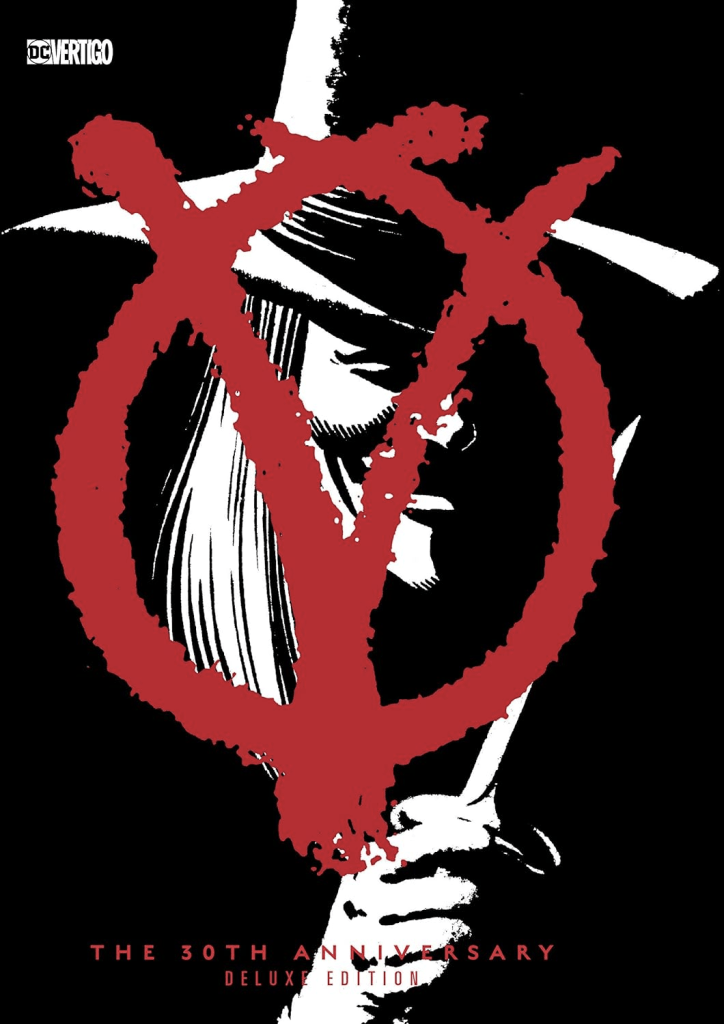
V for Vendetta, by Alan Moore
The blurb: A powerful story about loss of freedom and individuality, V For Vendetta takes place in a totalitarian England following a devastating war that changed the face of the planet. In a world without political freedom, personal freedom and precious little faith in anything comes a mysterious man in a white porcelain mask who fights political oppressors through terrorism and seemingly absurd acts. It’s a gripping tale of the blurred lines between ideological good and evil.
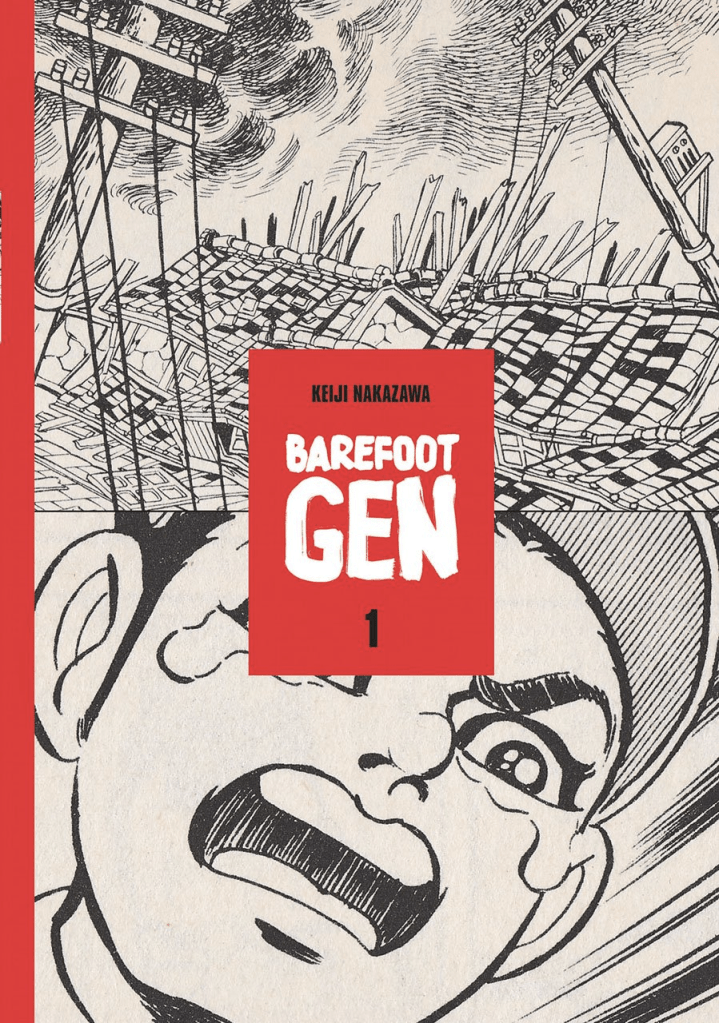
Barefoot Gen, by Nakazawa Keiji
The blurb: This classic manga recounts the bombing of Hiroshima from the perspective of a young boy, Gen, and his family. But the book’s themes (the physical and psychological damage ordinary people suffer from war’s realities) ring chillingly true today. Despite its harrowing nature, this work is invaluable for the lessons it offers in history, humanity and compassion. Published to coincide with the 60th anniversary of the Hiroshima bombing.
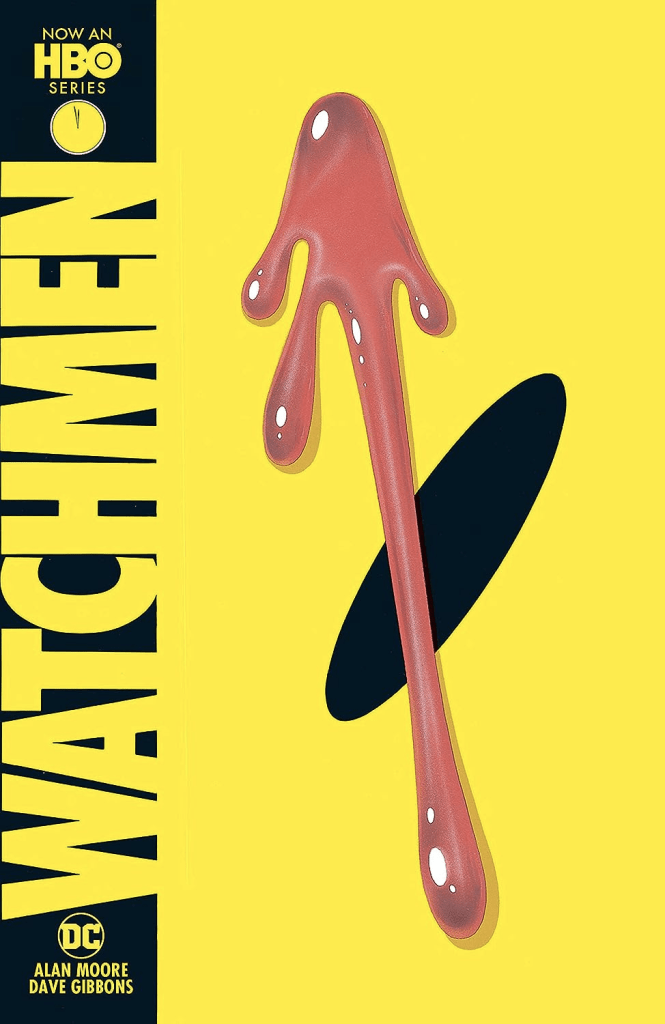
Watchmen, by Alan Moore
The blurb: Watchmen presents a world where the mere presence of American superheroes changed history–the U.S. won the Vietnam War, Nixon is still president, and the Cold War is in full effect. Considered the greatest graphic novel in the history of the medium, the Hugo Award-winning story chronicles the fall from grace of a group of superheroes plagued by all-too-human failings. Along the way, the concept of the superhero is dissected as an unknown assassin stalks the erstwhile heroes.
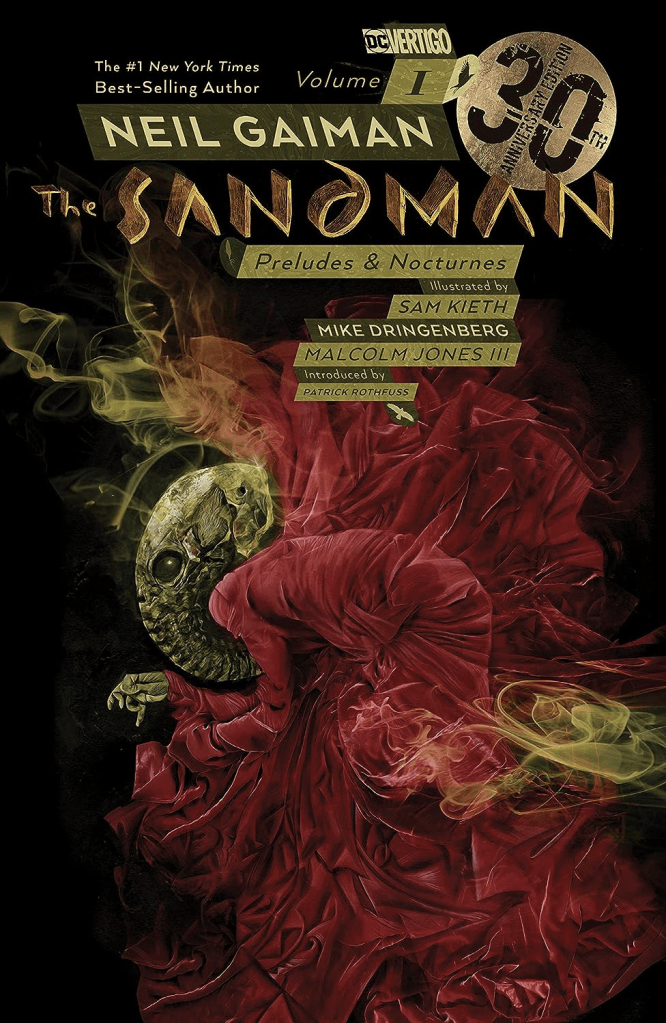
The Sandman, by Neil Gaiman
The blurb: New York Times best-selling author Neil Gaiman’s transcendent series THE SANDMAN is often hailed as the definitive Vertigo title and one of the finest achievements in graphic storytelling. Gaiman created an unforgettable tale of the forces that exist beyond life and death by weaving ancient mythology, folklore and fairy tales with his own distinct narrative vision.
In PRELUDES & NOCTURNES (the first volume in The Sandman series), an occultist attempting to capture Death to bargain for eternal life traps her younger brother Dream instead. After his 70 year imprisonment and eventual escape, Dream, also known as Morpheus, goes on a quest for his lost objects of power. On his arduous journey Morpheus encounters Lucifer, John Constantine, and an all-powerful madman.
Look out for copies that include the story “The Sound of Her Wings,” which introduces readers to Death (she is warm, she is compassionate, she is inexorable).
This is my favourite comic on the list, if not ever. But don’t let that sway you! We just can’t be friends until you read it.
Joking (not joking).
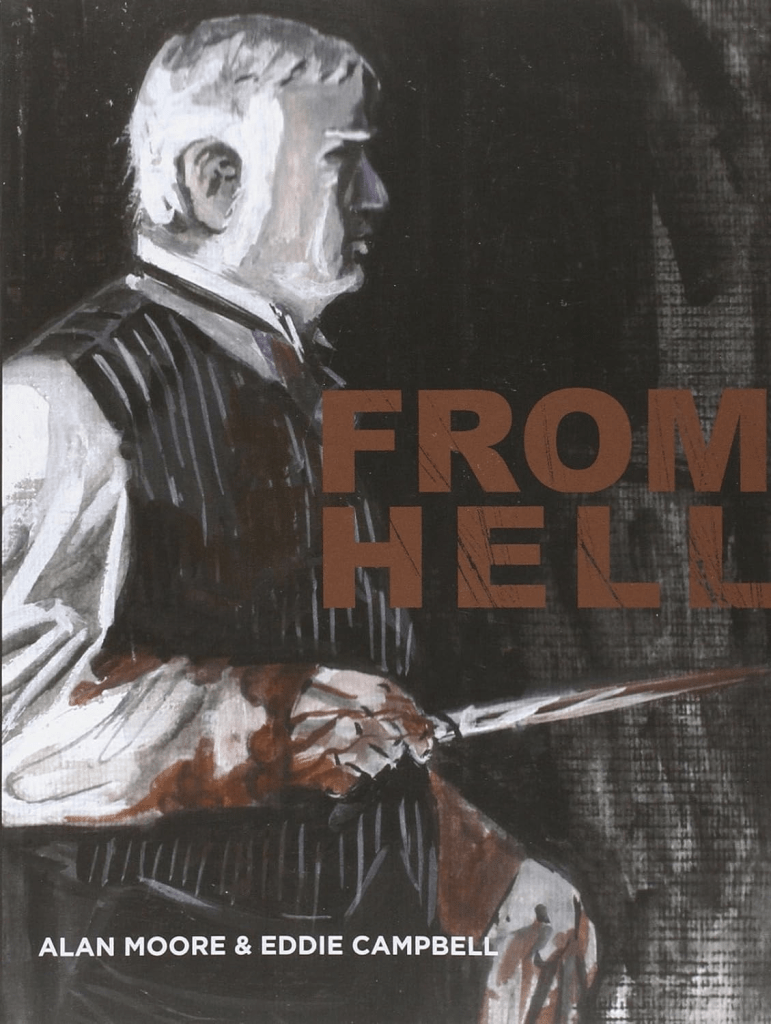
From Hell, by Alan Moore
The blurb: From Hell is the story of Jack the Ripper, perhaps the most infamous man in the annals of murder. Detailing the events leading up to the Whitechapel killings and the cover-up that followed, From Hell is a meditation on the mind of a madman whose savagery and violence gave birth to the 20th century. The story has garnered widespread attention from critics and scholars. Often regarded as one of the most significant graphic novels ever published, From Hell combines meticulous research with educated speculation, resulting in a masterpiece of historical fiction both compelling and terrifying.
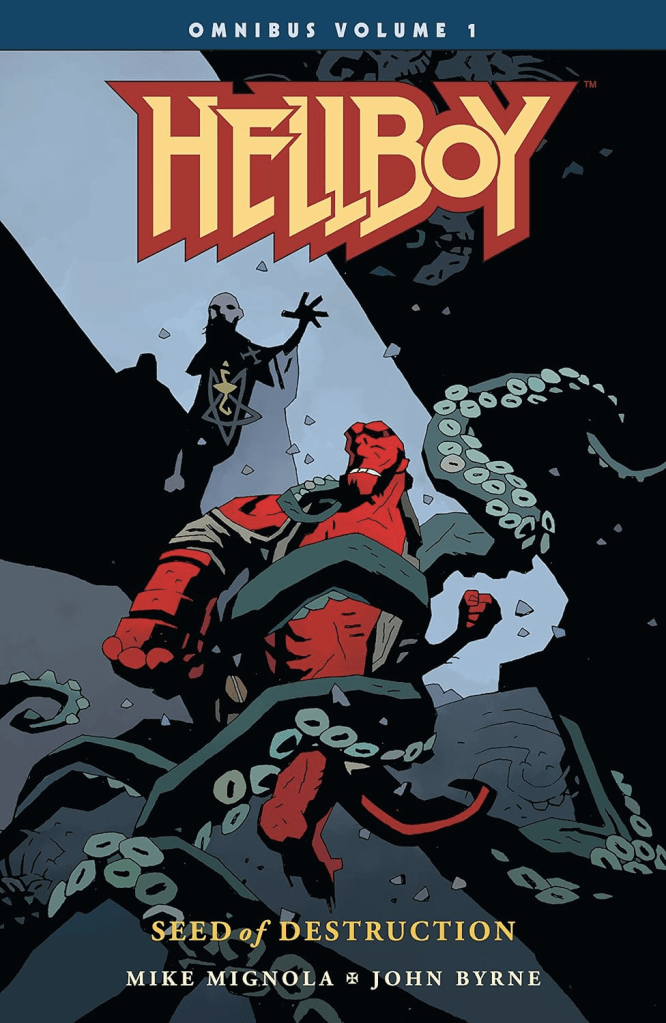
Hellboy, by Mike Mignola
I recommend you begin with Hellboy Omnibus 1: Seed of Destruction. Hellboy is quite a sprawling comic, and I have to confess I’ve only dipped my toes into it, but if you want quick and easy access: this is it.
The blurb: The story jumps from Hellboy’s mysterious World War II origin to his 1994 confrontation with the man who summoned him to earth, and the earliest signs of the plague of frogs. Avoiding his supposed fate as the herald of the end of the world, Hellboy continues with the Bureau for Paranormal Research and Defense, fighting alongside Abe Sapien, Liz Sherman, and drafting Roger Homunculus into his own ill-fated service with the B.P.R.D.
And if you enjoyed that and want more, then the four volume Hellboy Omnibus series along with the two volumes of The Complete Short Stories collect all of Mignola’s award-winning Hellboy stories into chronological order for the best reading experience.
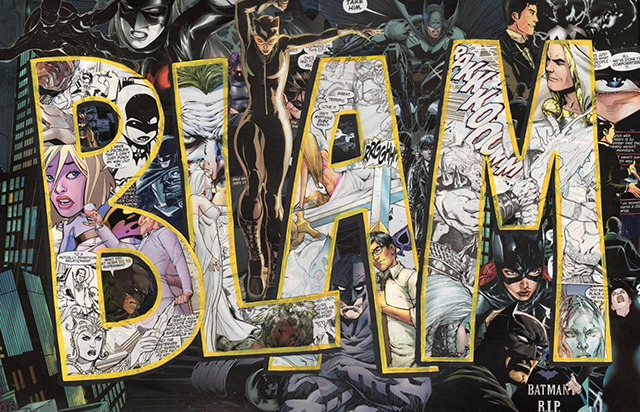
The eagle-eyed amongst you may have noticed the strong presence of Alan Moore in this list. As far as Western comics go, he’s a pretty definitive author, and if you want to just get a sense of how comics have developed then focusing on his work might be a good place to begin. They’re kind of heavy, though. Be warned.
Additionally, putting together this list really brought home to me how wrong the perception that comics are frivolous, or for kids, has become. These comics deal with war, death, identity and freedom. They are not light-hearted adventures and precocious little narratives. They are artistically sophisticated, carefully written, and they tell stories of deep and human significance.
So don’t let anyone ever shame you for reading a comic. They are part of Culture (with a capital C), and they hold a mirror up to our existence – albeit a mirror divided into panels.
Written by Alex Carabine
 Drawing on Forced Marriage
Leave a comment