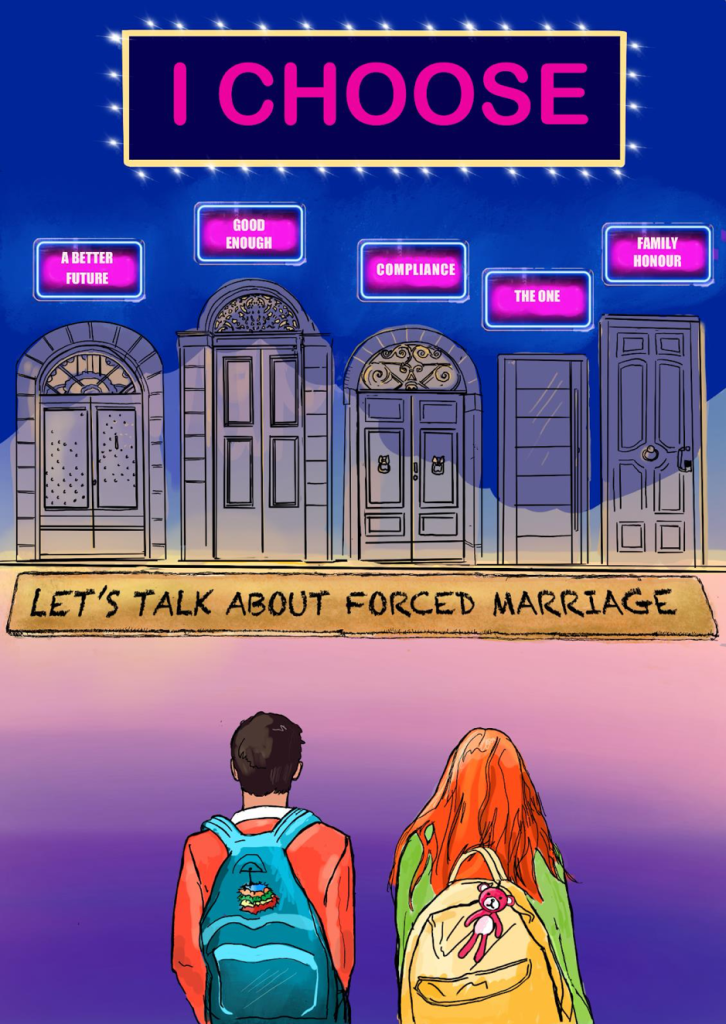
It has taken about thirteen years to arrive at this moment. From the very first glimmer of inspiration in Hannah’s postgraduate mind, to December 2023, with a comic in our hands and a teaching pack online. This year alone has been a whirlwind of school visits, art revisions, and data collection, as well as feedback and collaboration and an email chain so long that Outlook has a nervous breakdown when we ask it to ‘open new message.’ But we made it. We’re here.
The comic has LAUNCHED.
The day began with Hannah and I furiously rearranging tables, envisioning how the Human Rights Education Panel Discussion would work best, then trying to anticipate how people would most comfortably move around the other side of the room where our comic launch was taking place. Finally, everything was ready. Our guests began to arrive, and we took deep breaths.
Our guest speakers were Claire Benjamin from National Museums Liverpool and Karen Wynne from the Liverpool World Center, who, along with Hannah, discussed the human rights education work they do, its importance and aims, and how it contributes to freedom, dignity and justice for all (this year’s United Nations Human Rights Day theme). I chaired the panel discussion/round table, inviting guests to chime in, ask questions and share their thoughts. It was a bit of an adventure chairing this style of panel, and an absolute delight to hear Claire, Karen and Hannah speaking together about the importance of education in promoting awareness of human rights, as well as teaching respect and dignity. Claire reflected on how a museum is an ideal platform for education, and how the International Slavery Museum is well-situated in Liverpool to tackle issues around the city’s heritage and history, as well as the legacies of transatlantic slavery, including racism and discrimination. Museums, being for everyone, ought to have social justice at their heart. Karen agreed, and spoke about how social and climate justice are interlinked, and cannot be separated from the economy and global politics. In talking about taking our comic into schools, the panel explored how educators must be supported and given the skills to combat difficult subjects and foster critical thinking in their students, as well as how the perspective of educators might differ from the narratives of the people involved. It is vital that we include lived experiences in any development of human rights.
The audience was alert, curious and engaged, joining in the discussion with insightful questions and observations. It was a pleasure to hear so many voices from such a diversity of backgrounds, discussing how human rights can be improved. Karen highlighted the importance of ‘bridging the gap’, which I think this panel went a way towards achieving. We all reflected on how our particular fields naturally keep us isolated within our own spaces (the proverbial echo chamber), yet here we were, with backgrounds in local charities, international museums, education, law and humanities, and we were united in our desire to help people, and to make the world better than we had found it. The hour we had scheduled for the discussion flew by, leaving us thoughtful but energised.
We were able to carry that energy into the break, where people poured themselves tea, nibbled cakes and continued the discussion in a more informal manner. Once everyone was refreshed, we gathered them round for the comic launch itself.

Hannah and Helen McCabe (Associate Professor of Political Theory at the University of Nottingham, and an advisor on the project) took to the stage. Hannah explained how, during her PhD training at Aberystwyth, she took a module in which she studied law through opera, theatre and fine art (led by Chris Harding, who was passionate about the idea of illustrating research). This had sparked Hannah’s love for graphic novels, and inspired her to make a comic about forced marriage. Years later, Hannah met Helen at a conference where they were able to discuss their common interests in forced marriage and modern slavery. And when Hannah became a research assistant on Helen’s project ‘“To Have and To Hold”: Understanding the Relationship between Forced Marriage and Modern Slavery’, Helen supported Hannah in her applications for AHRC funding, and Karma Nirvana (along with their Survivor Ambassadors) kindly agreed to be involved, as did Savera UK and Savera UK Youth, Nottingham Girls’ Academy and Childwall Sports and Science Academy, Catherine Kirk of Nottingham City Council, and Emma Brown of Touch the Sun Designs.
And now here we are.
Sondos (a Karma Nirvana Survivor Ambassador) was then invited to speak to the group, and she gave us invaluable insight into how her lived experiences with honour-based abuse have informed her role as an educator, as well as how she was able to give us (incredibly important) feedback on the creation of the comic script.
After the applause died down, I gave the group a taster of our comic literacy lesson plan, and demonstrated how it could be applied to our Emina comic. You can find the lesson plan in our teaching pack here, as well as the comic. I explained how I introduced the students to the concept of a comic through memes, breaking down any resistance that students might feel towards comics through their perceived lack of familiarity. Basically, if they have seen a meme, they have a read a comic! Both art forms have panels, gutters and text that work together to tell a story. Once I was sure our launch audience felt confident with comics, I showed them our Emina page, and gave some brief close reading examples. For instance, the final panel of the Emina comic is narrower and darker than the rest of the page, indicating how her choices might be reduced after a forced marriage. Finally, I pointed out the posters around the room that depicted a selection of pages from the final comic, alongside activities they could do as part of the launch. For Emina, we included discussion questions from the teaching pack, as well as a ‘spot the difference’ game between the very first Emina page, and the final page that was created as a result of students’ feedback. For Chen, we displayed the script alongside the finalised page, so guests could get a sense of how the comic had developed over time. We also provided sticky notes and felt tip pens, so that guests could place their own ideas for an ending to Chen’s story in the deliberately blank panel at the bottom of the poster. Becca allowed for discussions on the intersection between forced marriage and modern slavery, which we felt chimed well with the Human Rights Day panel.
The final table held the feedback sheets which we had asked the school students fill out, with gingerbread figures they could customise and speech bubbles where they could write a comment on the comic workshop or the creation process. We left some blank gingerbread figure sheets on the table next to the printed comic and our promotional postcards, so guests could fill out their own feedback if they wished. It was heart-warming to have something at the event that represented our student collaborators in spirit, even though they couldn’t be there in person. Our launch guests seemed especially touched by the enthusiastic and thoughtful comments the students wrote in their speech bubbles.
Everyone mingled and chatted, placing sticky notes on the Chen poster and asking each other questions about Emina’s narrative. They were enthusiastic about the comic, complimentary about the art, and it was a real triumph to see such a labour of love be received so well.
To launch the comic close to Human Rights Day felt deeply significant. There is a real value in a multi-disciplinary approach to solving worldwide issues. No matter who we are or what background we come from, we all have skills, knowledge and experience to offer. It’s easy to feel discouraged, but we aren’t truly helpless. Not while we can fill a conference room with a wealth of people willing to think, to act, to try to improve the lives of others. There is hope, and from hope comes plans, and from plans – on this occasion – came a comic.
So far, I Choose: Let’s Talk About Forced Marriage has educated dozens of teenagers about how to protect themselves and their loved ones from human rights violations – and that was before it had even been launched. Imagine the impact it will have, now that it is complete. Now that it will find its way into the hands of those most vulnerable, those most in need of our support. Those who will benefit from being empowered. It’s a wonderful, life-affirming project, and you can be part of it! Download the comic, take it into the classroom or to the kitchen table. Classic comics are full of fanciful heroes in capes, but it’s education that’s the real superpower. Now, you can be a hero, too.
Just download the comic here.
Written by Alex Carabine
We would like to extend our deepest gratitude to the speakers, guests and collaborators who were part of the comic and its launch. Thank you!
 Drawing on Forced Marriage
Leave a comment