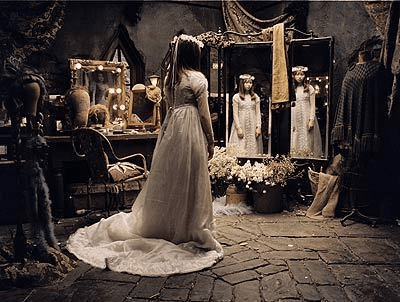
“Marriage is no picnic.”
Indeed it is not. It also isn’t a play. Or is it?
A Series of Unfortunate Events (the movie) follows Violet, Klaus and Sunny Baudelaire on their quest to uncover the truth behind their parents’ deaths and the destruction of their home. On their path to truth and justice, they (have to) outwit Count Olaf and his schemes to snatch the fortune they inherited.
One of Count Olaf’s ploys is to marry Violet to get to her money. Immoral, but not unheard of. Perhaps the more uncommon aspect lies in his attempt to conceal the legally binding nature of the wedding and his greedy intentions with a theatre play. Creative, but still immoral.
Immoral, but is it illegal as well?
In the movie it is not. The marriage is administered by Justice Strauss, a bonafide justice of the peace. She conducts the ceremony exactly as she would in a real wedding. Even though Violet is only 14, she can get married with the consent of her guardian. Conveniently, that is Count Olaf. The happy couple avow their consent to marriage by saying “I do” and sign the marriage certificate.
The happiest day of their lives?
Clearly not. When Count Olaf unveils his wedding plan to Violet and Klaus backstage, Violet exclaims that she will never say “I do”. Count Olaf appears to have anticipated her resistance. He has captured and caged baby Sunny and suspended the cage with Sunny inside from a tower. At his command, one of his henchmen (and women) will drop the rope that holds them. No safety net. He demonstrates this alternative plot to Violet and Klaus as the members of the audience begin to arrive to be entertained. Not my idea of a happy day.
Count Olaf mocks Violet’s apparent wish for a life of happiness, a roof over her head, and place to call her own. Charming. Who doesn’t want a husband who ridicules dreams of homely bliss and shows a blatant disregard for his wife’s basic needs?
And it gets better. Count Olaf continues: “And what about what I want? I want that enormous fortune and fraud investigations against me to cease. You’re going to help me get what I want tonight.” Who doesn’t want a self-important husband who sees marriage as a means to a rich end?
But this time even Violet does not see a way out. She tries to tell Justice Strauss, twice. The first time, Justice Strauss is too enwrapped in her dreams of stardom on stage to hear her. The second time, Count Olaf threatens to drop Sunny. I hate to say it but Count Olaf is right. Adults don’t listen to children. How reassuring when the advice is to speak to a trusted adult when there are forced marriage concerns.
Violet also tries to invalidate the marriage by signing the marriage certificate with her left hand, but Count Olaf is on high alert, notices, and asks her to use her right hand.
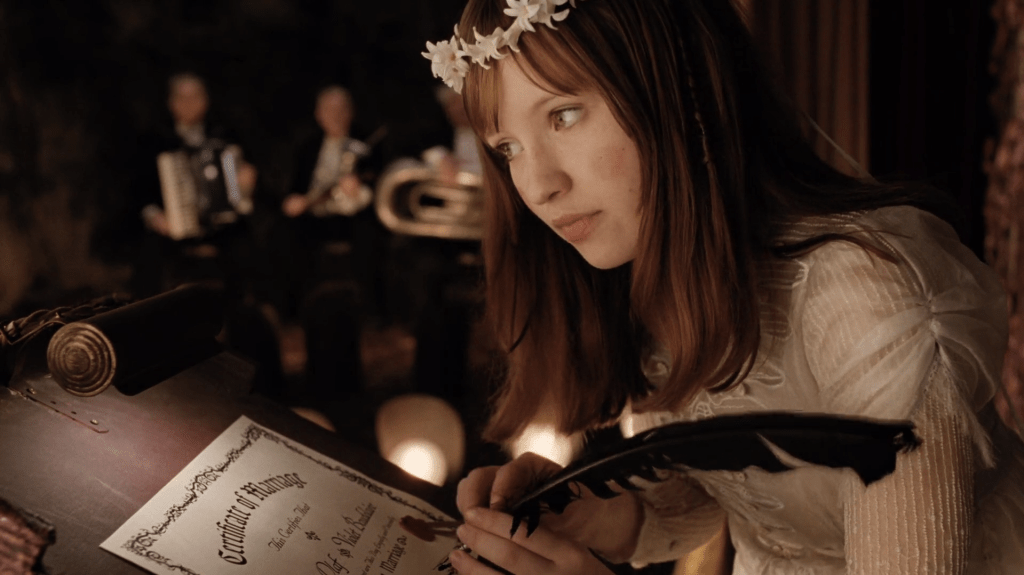
When the certificate is signed and Count Olaf ends the play, Violet tells the audience that her now husband threatened to kill Sunny if she did not go through with the wedding. The audience sighs with annoyance. Silly girl always telling silly stories. Violet gets the same reaction when she reveals that Count Olaf only married her for his financial benefit. But when Count Olaf admits that he was digging for gold, shock horror. “Arrest him!” “For what?” “For being a greedy monster!” Not for forced marriage. Justice Strauss flees the stage (exit left) in terror about her own actions and ignorance. Imagine the sound of a gravel banging on a wooden bench.
Still Violet’s marriage to Count Olaf was concluded. But fear not! Klaus comes to the rescue. Using an ornamental window like a magnifying glass, he catches the light and directs it at the marriage certificate. The paper catches fire. The marriage goes up in flames and burns to ashes. Not a picknick, more like a BBQ gone wrong.
At the end of the scene, the narrator tells us that “the Baudelaires had triumphed, a word that here means unmasking a cruel and talentless arsonist and solving mystery of the Baudelaire fire”. Not escaping a forced marriage. It’s a subplot after all.
If this was not a movie but real life, would Violet’s forced marriage to Count Olaf also be a subplot? Would it be a forced marriage, or would the marriage be valid and legal?
Well, as Alex has so wonderfully reflected on, the law in the UK changed in 2022 when the minimum age of marriage was raised to 18. Previously, it was 16 with parental consent. Under the old and new law, Violet’s marriage would be void, invalid. Just to say, the age difference between Violet and Count Olaf might be a thing but, in and of itself, it is not illegal.
What is illegal though is threatening someone so that they consent to marriage. Lack of free and full consent makes a marriage voidable, invalid from the point at which a court grants a decree of nullity. It also makes it a crime.
While the age difference between Violet and Count Olaf might not invalidate their marriage, their family relationship might. In the UK, parties to a marriage cannot be within prohibited degrees of relationship (once or twice removed, whether by blood, half-blood (yes…) or affinity). Count Olaf claimed to be a distant relative of the Baudelaires. If that is true at all, it sounds like he would be distant enough to be within permitted degrees of relationship. So their family relationship might not actually invalidate Violet’s and Count Olaf’s marriage.
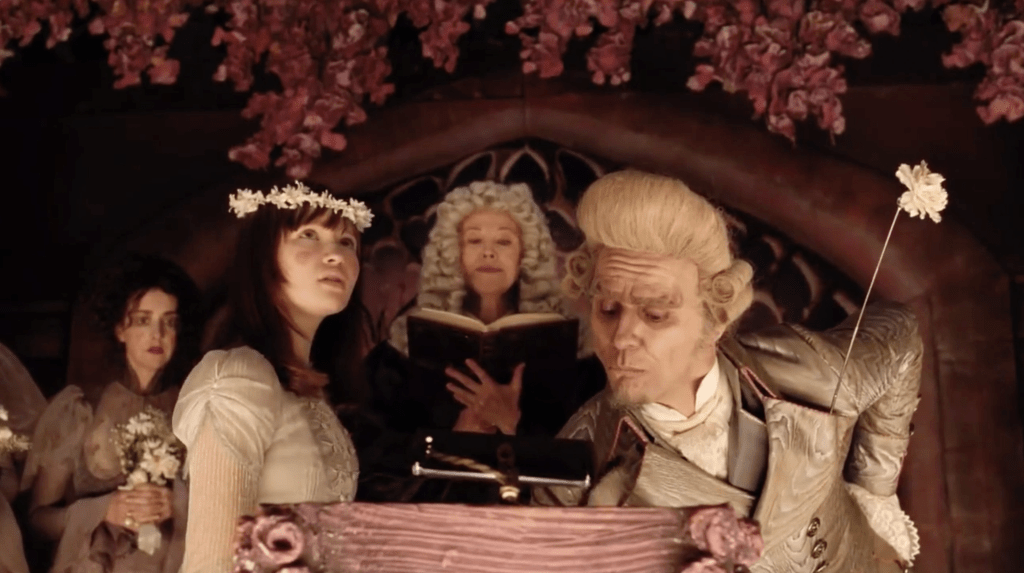
And then there are the formalities. Did the wedding take place in a registered building or on approved premises? Unclear. Did Violet and Count Olaf give notice? Doesn’t sound like it. Did they sign the marriage certificate? Yes, and they can just get a replacement if it is destroyed, for example by fire. Were two witnesses present? Well, there was a whole audience but only the couple signed the marriage certificate so no, not really. Was the wedding conducted by an authorised person. Yes. Did they register their marriage. Didn’t get that far, did it. So, given that some formalities may not have been followed, Violet’s and Count Olaf’s marriage might be invalid.
Does it matter that Count Olaf wanted to get married to swim in gold like Donald Duck? No. While sham marriages are sometimes defined as marriages between two people who are not in a genuine relationship but have married for financial gain, the UK defines them as marriages to circumvent immigration rules. That at least is not one of the Baudelaire’s problems.
So, in real life, Violet’s marriage to Count Olaf would be invalid, or could be invalidated, because the wedding might not have been compliant with all the formalities. Maybe more importantly, Violet is below the minimum age of marriage and did not give free and full consent. Therefore her marriage would also amount to a forced marriage.
All of our posts seem to end this way. Let’s go get something to eat.
Written by Hannah Baumeister
 Drawing on Forced Marriage
Leave a comment