If you’ve been here a while, you know that I – Alex – am an English literature PhD candidate. So I was absolutely delighted to have my worlds collide when I discovered that this book exists:
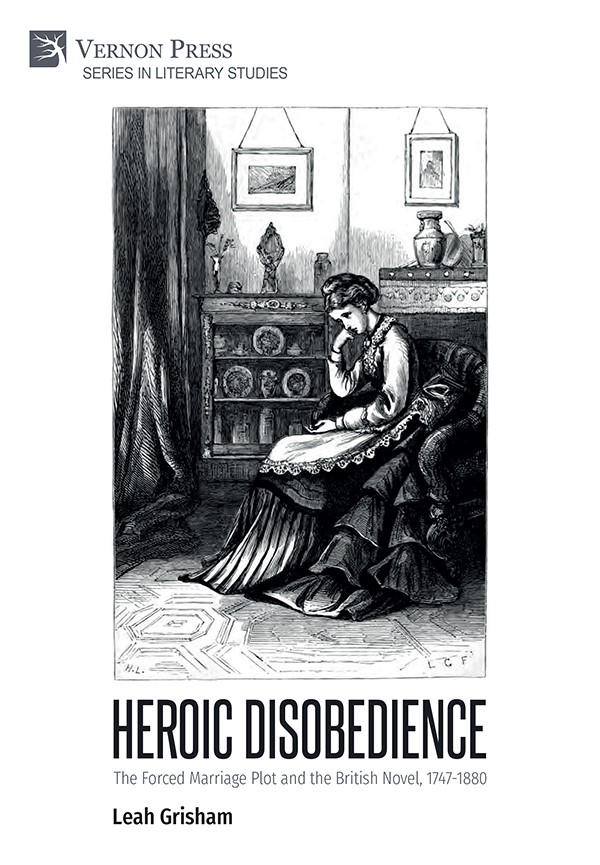
The blurb states:
‘Heroic Disobedience shows the ways in which eighteenth- and nineteenth-century novels used what the author terms the forced marriage plot – a plot arc in which a greedy father tries to force his daughter into a marriage she does not want but that would be financially expedient to himself – to explore capitalism’s detrimental impacts on women’s right to autonomy. As capitalist economic practices replaced mercantilism, a woman’s value was seen primarily in the economic sense. That is, men came to recognize that women – especially young, marriageable women – could be used as objects of exchange between men. Recognizing this phenomenon, the novelists considered in ‘Heroic Disobedience’ – Samuel Richardson, Charlotte Lennox, Mary Robinson, Charlotte Smith, Jane Austen, Charles Dickens, Elizabeth Stone, and Anthony Trollope – depict the very specific ways in which women were raised to become willing pawns in this system. Religious discourse, conduct guides, marriage and property laws, wages, lack of meaningful education, and inheritance practices combined to leave women with no other options besides dependence on their patriarchs. Importantly, authors who use the forced marriage plot go beyond exposing women’s subjugation by creating – and celebrating – heroically disobedient heroines who believe, above all else, that they have the right to determine their own futures: futures in which they are autonomous agents, not subjected objects.’
Doesn’t it give you a chill down your spine? Well, it does for me, but then I specialise in Victorian literature.
Grisham highlights in the introduction that the novel is an ideal medium (in this era particularly) for exploring the consequences of forced marriage on female protagonists, as the nature of novels allow for emphasis to be placed on the heroine’s individuality and subjectivity. After all, novels are a wonderful vehicle for interiority, as they allow us to hear a protagonist’s thoughts, to empathise with their struggles, to feel a reflection of their feelings. And in the eighteenth and nineteenth centuries, this gave unprecedented access to the inner worlds of women.
The monograph looks at authors such as Samuel Richardson, Jane Austen and Charles Dickens (amongst others), and through their novels Grisham is able to consider subjects such as the rise of capitalism, the slave trade and wealth accumulation, as well as masculinity and the construction of family. It focuses on ‘the extent to which masculine desire for wealth victimized women across socio-economic boundaries through overt (threats, violence, legal restrictions) and covert methods (coercion, social norms) that actively denied women basic rights over their lives’ (p.xxiii). These are drivers of forced marriage that are, sadly, still active today.
Though I intend to read the book in its entirety, I admittedly haven’t had time to explore every chapter before writing this snippet-review. Be that as it may, you must allow me to tell you how ardently I admired the Pride and Prejudice chapter.
(I’m sorry for the sneaky quote in that paragraph. That’s a lie, I regret nothing!)
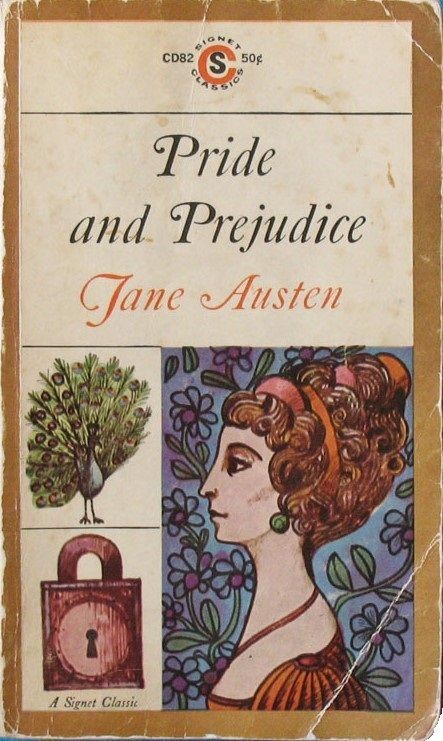
Ch. 3.1: Pride and Prejudice reconsidered: or, why readers should give Mrs Bennet a break.
It may surprise you to learn that I used to hate Jane Austen. Hate. Well, reading her. I grew up on the BBC adaptation in the 90s and that was quite enough of that, thank you very much. Romance? Ugh. I was a hardened feminist, who needs love? And my goodness, the opening paragraph. So famous, so lauded, so distasteful.
‘It is a truth universally acknowledged, that a single man in possession of a good fortune, must be in want of a wife.
However little known the feelings or views of such a man may be on his first entering a neighbourhood, this truth is so well fixed in the minds of the surrounding families, that he is considered the rightful property of some one or other of their daughters.’
(Pride and Prejudice, p.1)
I was not a sympathetic reader, and that just smacked of gold-digging to teenage me. Why were these women so obsessed with money? It’s all anyone goes on about, I thought. How much they have per year, how much the men are worth, how much the women spend on dresses. It got on my nerves more than Mr Bennet’s dry sense of humour got on his wife’s.
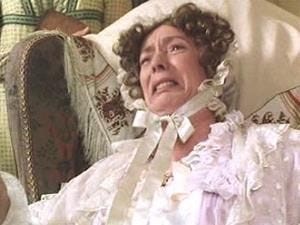
Well, by my 20s I decided I would read Jane Austen. It took a couple of novels, true, but once I finally figured out how brutally acute and witheringly ironic her writing is, I fell in love. That opening paragraph? It’s playful, it’s whimsical and it’s a nail in the coffin of the daughters of the neighbourhood. Because the reason they’re so obsessed with money is that they have no access to their own except through the mediation of their male relatives.
Take the Bennet girls. For all their mother’s silliness, their father is a quiet, loveable, apathetic monster. Why? His fortune is entailed so that once he dies, all his money gets handed over to his nearest male relative (Mr Collins), leaving his wife and five daughters not only penniless, but without a home. Mrs Bennet is obsessed with marrying her daughters not because she’s a flighty gold-digger (though she is a bit), but because her daughters will not survive unless they find husbands to support them. So, she pressures her daughter Lizzie to marry Mr Collins, a marriage that would save them all. This is an almost essential move, as Mr Bennet won’t stir himself to put things right (he could have broken the entail; he didn’t. He could have saved money; he never bothered) and he is utterly disinterested in the prospects of his daughters. No wonder Mrs Bennet’s nerves are fraying.
Grisham expands on this in her monograph, calling it ‘The many grey shades of forced marriage in Regency England’ (p.77). She uses Charlotte Lucas (Lizzie Bennet’s best friend, who marries Mr Collins after Lizzie turns him down) as an illustration of how women were ‘gently forced’ (p.78) into marriage in the early nineteenth century. Charlotte is 27 (catastrophically old for a single woman in this era) and has no means of supporting herself. Like Lizzie, she is staring down the barrel of penury and potential homelessness. And so:
‘Mr. Collins, to be sure, was neither sensible nor agreeable: his society was irksome, and his attachment to her must be imaginary. But still he would be her husband. Without thinking highly either of men or of matrimony, marriage had always been her object: it was the only honourable provision for well-educated young women of small fortune, and, however uncertain of giving happiness, must be their pleasantest preservative from want.’
(Pride and Prejudice, p.157)
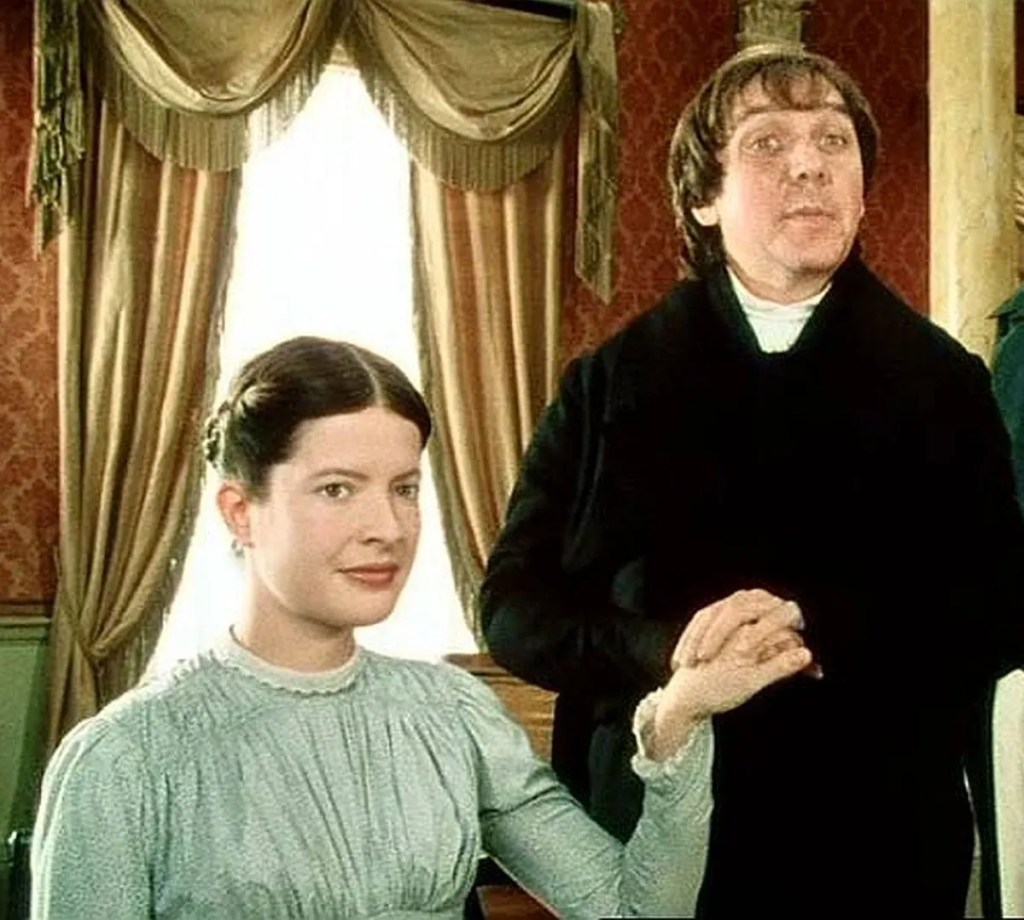
There is no overbearing patriarch in Charlotte’s case, but there is, as ever, the heavy weight of the patriarchy crushing her beneath its social strictures. She is ‘gently’ forced into marriage, because there were so very few options open to her without it. ‘However uncertain of giving happiness’ – what a heart-breaking sentiment with which to enter a marriage.
This was only a snippet review of Heroic Disobedience, using a novel that I imagine most readers of this blog will at least be vaguely familiar with (I doubt anyone has casually read Clarissa by Richardson in this day and age. I know I haven’t). And from what I have read, I highly recommend the monograph to anyone who is interested in literary representations of forced marriage. I can’t wait to keep reading.
Now, the monograph has a very strict time period and set of rules to follow; all monographs do. But it’s my duty to remind the readers of this blog that forced marriage wasn’t left on Mr Collins’ doorstep in Regency England. It continues today, and it doesn’t just affect women and girls. It can happen to anyone, of any ethnicity, class, religion, gender or sexuality. Austen exposed the drivers of forced marriage in her era, and now it’s up to us to consider the harm forced marriage can do in our own.
So, remember to stand up for Charlotte Lucas next time you’re watching Pride and Prejudice with an incredulous, romantic friend (or a cynical teenage girl, like I was). Spare a compassionate thought for Mrs Bennet and her tortured nerves. And, of course, remember that the simplest method of raising awareness about forced marriage in our own era is to share this website with a friend, a local school or a loved one. It’s too late to rescue Charlotte (so thank goodness she’s fiction), but we can help those (real people) who need us now.
Written by Alex Carabine
 Drawing on Forced Marriage
Leave a comment