Choose Your Story
Here you can download either the full comic and the complete educator guidance to use together to teach your students about forced marriage. Alternatively, you can choose to download individual comics along with their accompanying minimal version of the lesson plan, allowing you to tailor your lessons to your students.
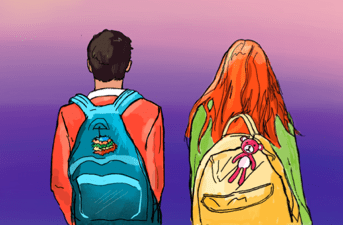
I Choose: Let’s Talk About Forced Marriage
To protect human rights, we are all responsible to learn about forced marriage and to challenge it. And that is why we made this comic. We want the comic to be used to educate young teenagers about forced marriage and to empower them to become allies of those at risk or already experiencing forced marriage. We hope that it helps to build communities where people who care about each other look out for their loved ones. The stories in this comic show examples of different types, causes and consequences of forced marriage and focus on possibilities for resistance and intervention.
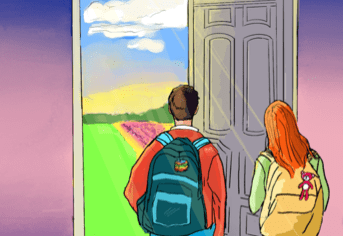
Educator Guidance
This educator guidance accompanies our comic. It includes lesson plans for Year 8 and 9 (key stage 3). The aim of the comic and this guidance is to: encourage engaging and nuanced education about forced marriage; raise awareness about forced marriage; and encourage and support young people to become allies and take action to end these practices as well as become aware of service to help those at risk or already experiencing forced marriage. Students will feel empowered to reflect how they can take actions to help end forced marriage, and will develop comic literacy, analytical and critical thinking skills, communication and presentation skills, creativity, interpersonal skills, and team work.
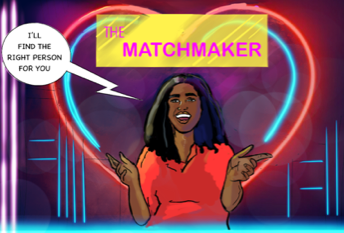
The Matchmaker
The Matchmaker presents an opportunity to learn about the difference and sometimes fine line between arranged and forced marriage. The protagonists agree to have their marriage arranged by a matchmaker. The comic shows different, non-linear ways in which their stories can develop. Some demonstrate the protagonists’ free and full consent and their ability to disagree with a proposed match, others indicate grey areas of reluctant acquiescence under pressure. Some highlight that both parties or just one person might consent, disagree, or acquiesce.
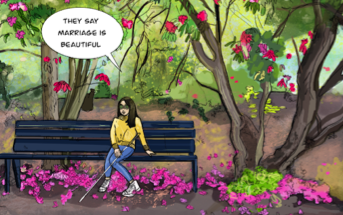
Emina is a 16-year-old blind girl. Her story offers an opportunity to discuss the law related to (forced) marriage and whether she freely consents or merely repeats what she is being told without actually agreeing. It also offers an opportunity to discuss her capacity to consent based on her age and disability. Her story highlights disability and concerns for a person’s wellbeing as a cause of forced marriage.
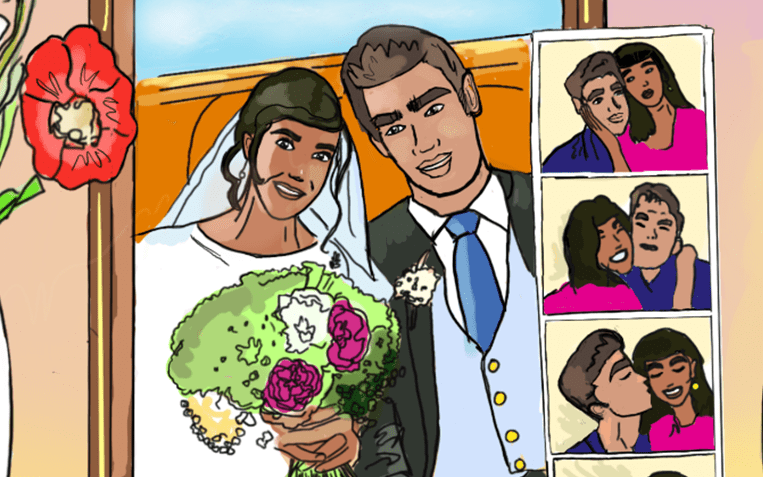
Let’s Talk About Azedah
Azedah’s story offers an opportunity to discuss the difference between an arranged and forced marriage as well as signs, causes, and consequences of forced marriage and opportunities for intervention.
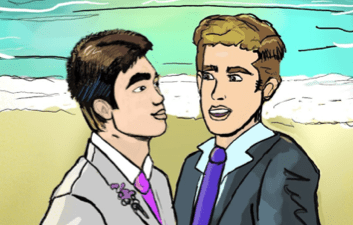
Chen’s story shows that boys and men can be forced into marriage as well. It highlights homosexuality and ethnically mixed relationships as risk factors. Chen’s parents are also motivated by tradition, which can be another cause of forced marriage. The story demonstrates that not only male but also female family members can be the driving force behind a forced marriage.

Let’s Talk About Becca
Becca’s story focuses on the relationship between forced marriage and modern slavery. Her father gives Becca in marriage to pay off a financial debt.
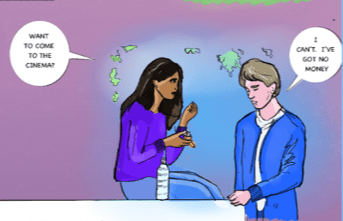
Let’s Talk About The Friend
The Friend is aimed at students who might not consider themselves at risk of forced marriage or forced marriage to be an issue that is relevant to them. It highlights signs of forced marriage that friends could spot and ways in which friends could intervene.
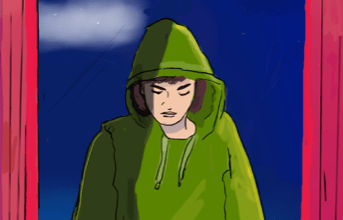
Let’s Talk About the Bigger Picture
The Bigger Picture contextualises forced marriage within other human rights abuses and forms of ‘honour’-based abuse to highlight that forced marriage does not happen in a vacuum.
Choisir Son Histoire
Ici, vous pouvez télécharger la bande dessinée complète pour enseigner à vos élèves le mariage forcé.
Je Choisis : Parlons du Mariage Forcé
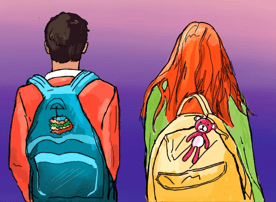
Pour protéger les droits de l’homme, nous avons la responsabilité de nous informer sur le mariage forcé et de le dénoncer. C’est pourquoi nous avons réalisé cette bande dessinée. Nous voulons que cette bande dessinée soit utilisée pour sensibiliser les jeunes adolescents au mariage forcé et pour leur donner les moyens de devenir les alliés des personnes qui risquent d’être mariées de force ou qui en font déjà l’expérience. Nous espérons qu’elle contribuera à créer des communautés où les gens qui se soucient les uns des autres veillent sur leurs proches. Les histoires de cette bande dessinée montrent des exemples de différents types, causes et conséquences du mariage forcé et mettent l’accent sur les possibilités de résistance et d’intervention.
Votes of Confidence
“I am thrilled to endorse the ‘I Choose: Let’s Talk About Forced Marriage’ resources and teaching materials. As a practising teacher and consultant, actively involved in enhancing the PSHE curriculum in North East schools, these resources have proven to be invaluable to my work. The inclusion of trauma-informed illustrations, thoughtfully curated content, and discussion points has not only facilitated meaningful conversations with students but has also significantly contributed to my role in reviewing curriculum content. The resources go beyond merely addressing the topic, as they have enabled me to conduct comprehensive curriculum reviews and deliver effective training on how to approach this sensitive content without resorting to sensationalism or perpetuating harmful stereotypes. I wholeheartedly endorse these resources as an essential tool for any educator committed to fostering a safe and informed learning environment.”
Sondos Bowker, Teacher and Education Consultant
“As social workers dedicated to assisting victims of forced marriage, we were delighted to discover these precious prevention materials. ‘I Choose’, by combining relational education and prevention, is a valuable tool for students, teachers, and anyone wishing to learn more about this all-too-unreported violence. The non-stigmatizing illustrations, along with a profound understanding of the issue informed by practice, research, and the intersection of our disciplines, make it a remarkable resource. The conceptual team has honoured us by allowing us to translate the comic into French, with our hope of seeing it translated into many other languages and disseminated far beyond our two countries. We appreciate that everyone, whether facing forced marriage or knowing someone at risk of forced marriage, can find useful contacts and actions for their protection and support. Thank you for this beautiful project.
Marine-Emmanuelle Lamour, Advocacy Officer and Program Assistant, NGO Voix de Femmes – SOS Mariage Forcé (France)
“I recently came across this project and I was thoroughly impressed by the method of communication. The use of a comic book to convey such a critical message was both innovative and impactful. It effectively engaged the target audience with its relatable characters and compelling storytelling, making a complex and sensitive topic more accessible and understandable. My teenage son was engaging with it deeply and it triggered a comprehensive conversation about forced marriage in our family.
This approach inspired me to consider creating my own comic book on a subject I am passionate about. The project demonstrated how visual storytelling can be a powerful tool for education and advocacy, reaching young people in a format they enjoy and can easily connect with. Kudos to the team behind this project for their creativity and for setting a great example of how to address important issues in a way that resonates with teenagers.”
Krisztina Rudolf, PhD student
 Drawing on Forced Marriage